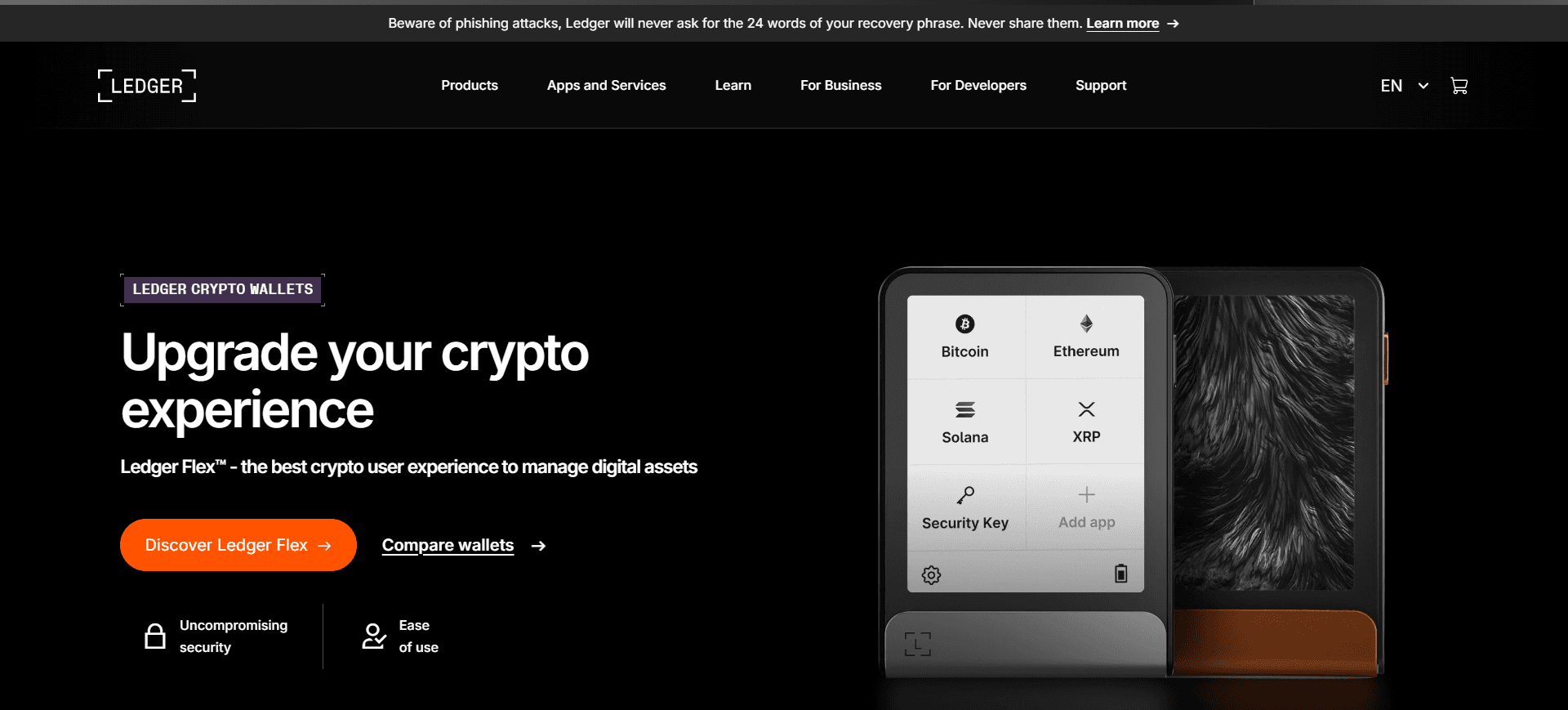
Ledger Live is the official software application developed by Ledger to help users manage their cryptocurrency through a secure interface that works directly with Ledger hardware wallets. It acts as a central dashboard where users can track their portfolio, install apps on their devices, send and receive digital assets, and interact with supported blockchain networks. This long-form educational content explains everything you need to know about Ledger Live, including setup, features, security principles, asset management, common mistakes, portfolio tools, updates, and how the system works in combination with Ledger devices. This guide is intended purely for informational purposes and does not replace official instructions found from Ledger.
Understanding the Purpose of Ledger Live
Ledger Live was created to simplify cryptocurrency management and provide a trusted environment where users can perform transactions securely. While the hardware wallet stores private keys offline, Ledger Live serves as the gateway to the blockchain. It allows communication between your device and the network without ever exposing your private keys. The software is available for both desktop and mobile, offering accessibility across different platforms.
The main reason for Ledger Live’s existence is to give users a unified interface where they can manage multiple assets, check real-time balances, view transaction history, and confirm operations using their hardware wallet. Its goal is to make secure crypto management as convenient as possible, combining ease of use with robust security principles.
How Ledger Live Works with Ledger Hardware Wallets
Ledger Live does not store private keys. Instead, it communicates with the secure element chip inside your Ledger Nano device. When you perform operations like sending crypto, the transaction details are displayed on the device screen. Only after you physically approve them does the transaction get signed and broadcast to the blockchain. This separation between transaction preparation (handled by Ledger Live) and transaction signing (handled by the device) creates a strong security model.
Ledger Live retrieves public data, such as account balances and transaction history, directly from blockchain networks or trusted providers. This allows users to monitor their portfolio without compromising security. In essence, Ledger Live handles everything that doesn’t require private-key access, while the hardware wallet handles the sensitive tasks.
Setting Up Ledger Live for the First Time
To begin using Ledger hardware wallets, Ledger Live is essential. The setup process usually involves downloading Ledger Live from the official source, installing it on your device, and following the onboarding flow. During setup, you confirm your Ledger device’s authenticity, create or restore a wallet, set up your PIN, and back up your recovery phrase if you are initializing a new device.
Ledger Live guides you through these steps, making it easier for beginners to avoid mistakes. Once the hardware wallet is set up, Ledger Live opens a dashboard where you can begin installing apps for different cryptocurrencies and adding accounts.
The Dashboard: Your Central Command Center
Once Ledger Live is fully set up, users are greeted with a dashboard that summarizes their crypto activity. The dashboard typically displays:
Portfolio value
Recent transactions
Connected device status
Market trends
News and updates
The portfolio feature is especially useful because it organizes your assets in one place, even if you hold dozens of cryptocurrencies. Ledger Live aggregates all accounts and presents clear insights into changes in your balance over time.
Portfolio Management and Tracking
One of the most appreciated features of Ledger Live is portfolio tracking. This tool allows users to visualize their asset distribution, price movements, and historical trends. The portfolio updates automatically based on blockchain data and market prices. Ledger Live helps users maintain a clear picture of their holdings without requiring third-party portfolio apps.
Users can track growth, view profit and loss changes, study performance charts, and analyze their portfolio allocation across multiple assets. This transparency helps individuals understand their investment patterns and make informed decisions.
Adding Crypto Accounts in Ledger Live
Each cryptocurrency requires a corresponding app installed on the hardware wallet. For example, Bitcoin requires the Bitcoin app, while Ethereum requires the Ethereum app. Once the app is installed on the device, Ledger Live allows users to add accounts. An account represents a blockchain address controlled by the hardware wallet.
When adding an account, Ledger Live synchronizes with the blockchain to retrieve existing balances. If the account has prior transactions, Ledger Live displays them immediately. This ability to manage multiple accounts across various blockchains makes Ledger Live a versatile and centralized management tool.
Sending Cryptocurrency with Ledger Live
Sending crypto is simple but relies on strict verification measures. When a user enters a recipient address and amount in Ledger Live, the application prepares the transaction. The user must then check the device screen to confirm the details. This ensures that even if malware compromises the computer, the user can detect fraudulent attempts because the hardware wallet shows the real transaction information.
Once the user approves the transaction on the device, the hardware wallet signs it internally and broadcasts it through Ledger Live. This system ensures that private keys remain secure and offline.
Receiving Cryptocurrency with Ledger Live
Receiving assets through Ledger Live involves generating and verifying a receiving address. The application provides a public address for receiving funds, but users must also confirm that the address displayed on their computer matches the one shown on their Ledger device. This prevents address-manipulation attacks.
Ledger Live also logs incoming transactions. Once the blockchain confirms the transaction, the amount appears in the account balance.
Staking and Earning Features
Ledger Live supports staking for several cryptocurrencies through built-in integrations. Staking allows users to earn passive rewards by participating in network validation or delegation. Users can stake assets like Ethereum, Tezos, or Polkadot depending on the blockchain.
The staking process involves:
Choosing an asset that supports staking
Delegating through Ledger Live
Confirming actions with the hardware wallet
Viewing reward accumulation over time
Ledger Live does not control the assets during staking. Users maintain self-custody while delegating network participation.
Buying, Swapping, and Selling Through Ledger Live
Ledger Live integrates with partners that offer buying, swapping, or selling functions. These services allow users to purchase cryptocurrency with fiat methods, exchange one crypto for another, or sell supported assets. Though Ledger facilitates these services, the transactions are performed by third-party providers.
Ledger Live provides convenience by placing these options directly inside the app, but it maintains the hardware wallet requirement for secure confirmations. Every swap or purchase requiring transaction signing still needs user approval on the device.
Security Principles Built into Ledger Live
Security is at the core of Ledger Live’s design. Some of the major principles include:
Private keys never leave the device
All sensitive actions require physical confirmation
Public data and blockchain interactions are handled externally
Firmware and apps receive encrypted updates
Ledger Live uses checks to verify device authenticity
User interaction is required for signing every transaction
Recovery phrases are never entered into Ledger Live
These principles reinforce a separation of responsibility that protects users even if the computer or network environment is compromised.
Common Mistakes Ledger Live Helps Prevent
Many users new to crypto may misunderstand security rules. Ledger Live tries to prevent common mistakes, such as:
Entering the recovery phrase into websites
Relying on unofficial downloads
Approving transactions without reviewing device screens
Mixing custodial and non-custodial concepts
Storing recovery phrases digitally
Misidentifying phishing attempts
Ledger Live includes educational messages, warnings, and reminders to help users maintain correct security habits.
Regular Software and Firmware Updates
Ledger Live frequently updates to introduce improvements, support new assets, fix bugs, and maintain compatibility with evolving blockchain networks. Users are prompted to install updates directly within the application. The process is straightforward and usually requires confirming actions on the hardware wallet.
Firmware updates, however, require extra caution. Ledger Live assists by providing step-by-step guidance to ensure safe installation. Updating firmware strengthens the device, patches vulnerabilities, and adds new functionalities.
Interacting with Web3 and External Services
Ledger Live supports limited Web3 interactions, while most decentralized applications require Ledger users to connect through external wallets like MetaMask. Even when connecting externally, the Ledger device serves as the signing authority, keeping private keys offline.
Ledger Live provides its own secure connection for supported services, and it ensures that sensitive actions always require hardware confirmation. This prevents unauthorized smart contract interactions or malicious Web3 activity.
Managing NFTs Through Ledger Live
Ledger Live supports certain blockchain networks that include NFTs. Users can view, send, and receive NFTs as long as the blockchain is supported. NFTs appear in the collectible section of Ledger Live, which organizes them neatly for easier browsing.
NFT transfers also require hardware verification. Users must confirm addresses and smart contract interactions through the device, keeping the process secure.
Understanding Synchronization and Blockchain Data
Ledger Live pulls blockchain data during synchronization. The process fetches balances, transaction history, and blockchain status. This ensures that users always have an up-to-date view of their assets.
Synchronization does not pull private information. It only fetches publicly accessible blockchain data linked to the account's public keys. This maintains privacy and ensures that sensitive information remains offline.
Why Ledger Live Is Important for Crypto Self-Custody
Self-custody is a core principle of cryptocurrency ownership. It means users control their assets without relying on centralized exchanges or third-party custodians. Ledger Live plays an important role in enabling self-custody by:
Giving users full control of their transactions
Ensuring private keys stay offline
Allowing secure access to blockchain networks
Providing a unified environment for many assets
Reducing the risk of hacks, scams, and phishing
By offering a secure yet user-friendly experience, Ledger Live bridges the gap between beginner accessibility and advanced crypto principles.
The Future of Ledger Live
Ledger continues to expand Ledger Live with support for more blockchains, upgraded features, and better integrations. As the crypto ecosystem evolves, Ledger Live is expected to grow alongside it, offering tools for staking, governance participation, NFT management, and additional Web3 activities.
Conclusion
Ledger Live is an essential tool for anyone using a Ledger hardware wallet. It combines ease of use with security, offering a centralized platform for managing accounts, tracking portfolios, sending and receiving crypto, staking assets, interacting with blockchain networks, and maintaining secure access to digital funds. By separating sensitive processes from everyday interactions, Ledger Live strengthens security while giving users a clear and intuitive interface. Its purpose is to simplify self-custody and empower individuals to take full control of their cryptocurrency using secure, trusted methods.